
Call for Proposals
The Southeast Energy Efficiency Alliance (SEEA) is now accepting session proposals for the 2026 Southeast Energy Summit, taking place November 16-18, 2026, at the Beau Rivage Resort in Biloxi, Mississippi.
THEME
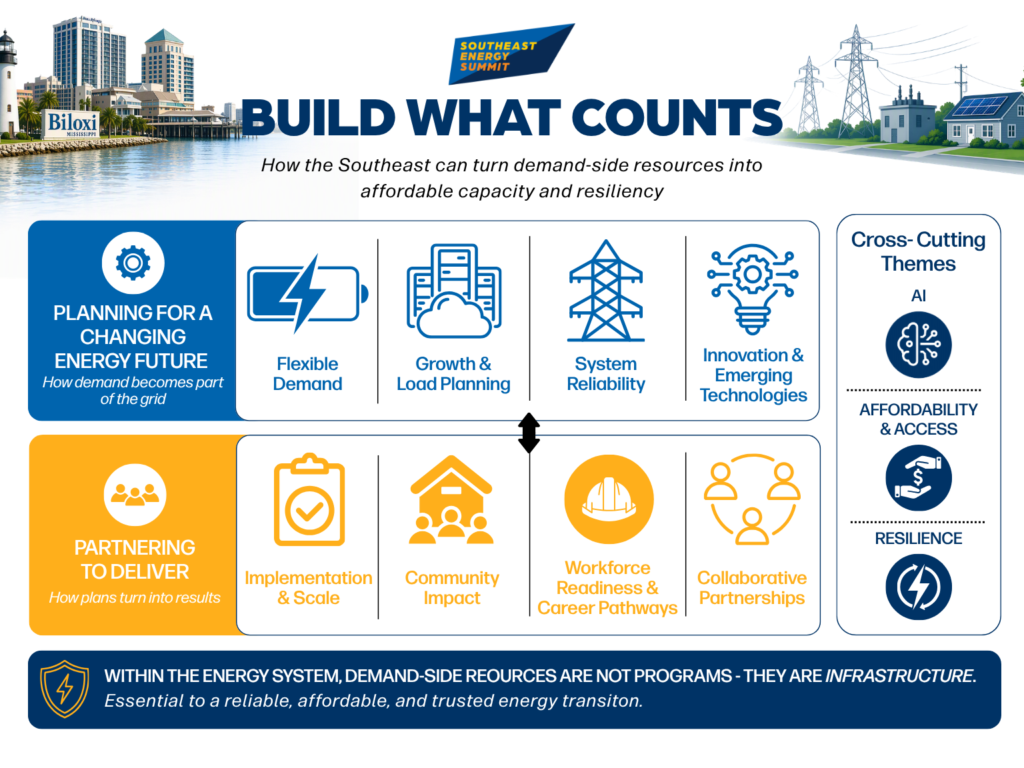
Build What Counts
proposal deadline
Thursday, August 6, 2026, at 11:59 pm ET
Notification of Acceptance
Starting Tuesday, August 25, 2026
Shape the Conversation
The Southeast Energy Summit convenes leaders, practitioners, researchers, policymakers and community changemakers working to advance energy efficiency, affordability, resilience, and economic opportunity across the Southeast and island territories.
For 2026, we invite proposals aligned with our theme, Build What Counts. The conference is organized around two tracks, (1) Planning for a Changing Energy Future and (2) Partnering to Deliver, with cross-cutting themes of Resilience, Affordability and Access, and Artificial Intelligence woven throughout the program. Additional details on the tracks are included below.
SEEA strongly encourages proposals for facilitated, interactive sessions that actively engage attendees in discussion, peer learning, collaborative problem-solving, and action-oriented dialogue, in addition to traditional panels and presentations.
We are particularly interested in having some sessions that move beyond traditional presentations and create meaningful opportunities for participants to contribute ideas, share experiences, and work together to address a shared challenge, explore an emerging opportunity, or develop practical solutions that can be applied across our region. We also encourage proposals that highlight opportunities, partnerships, and solutions taking shape in the Gulf region.
Conference sessions are 50-60 minutes in length. Proposals should be designed to fit within this timeframe.
Proposal Topics
How the Southeast can turn demand-side resources into affordable capacity and resiliency
Cross-Cutting Themes
Resilience, Affordability and Access, and Artificial Intelligence woven throughout the two tracks
Track 01
Planning for a Changing Energy Future
How demand becomes part of the grid – The Southeast is at an inflection point. Load growth is accelerating, generation capacity is tightening, and new technologies are emerging. Track 1 examines how demand-side resources, AI tools and technology, and resilience strategies are reshaping planning decisions and redefining what counts as capacity across the region.
Session Topic Examples: The listed examples are intended to illustrate the types of conversations that fit within this track, not to define its boundaries. We welcome proposals on related topics and encourage creative ideas that align with the track theme, even if they are not reflected in the examples below.
track 02
Partnering to Deliver
How plans turn into results – Systems are built by people and for people. Track 2 explores the skills and partnerships that bring plans to life. From building technical expertise to earning trust, this track examines how the Southeast can put energy solutions into practice and create lasting benefits for regional communities.
Session Topic Examples: The listed examples are intended to illustrate the types of conversations that fit within this track, not to define its boundaries. We welcome proposals on related topics and encourage creative ideas that align with the track theme, even if they are not reflected in the examples below.
Frequently Asked Questions
Do speakers need to register?
Yes, all presenters must register for and attend the conference to confirm their participation.
Are presenter registration fees covered?
No. Presenters are responsible for their own conference registration fees, travel expenses, and accommodations. However, individuals whose proposals are accepted will receive a discounted registration code to use when registering for the conference.
What happens if my proposal is accepted?
Accepted presenters will receive notification on Monday, August 24, 2026, along with additional information about next steps, conference registration, and presenter requirements.
What types of sessions are you looking for?
We encourage a mix of traditional presentations and panel discussions and are especially interested in interactive, facilitated sessions that engage attendees in discussion, peer learning, collaborative problem-solving, and action-oriented dialogue.
How long are conference sessions?
Conference sessions are 50–60 minutes in length. Proposals should be designed to fit within this timeframe.
Can I submit more than one proposal?
Yes. Individuals and organizations may submit multiple proposals for consideration.
Are virtual presentations available?
No. The Southeast Energy Summit is an in-person event. All accepted speakers are expected to present onsite in Biloxi, Mississippi.
Stay Connected with Us
Questions?
Please contact both:
Kendall Sewell: ksewell@seealliance.org
Amy Lovell: alovell@seealliance.org